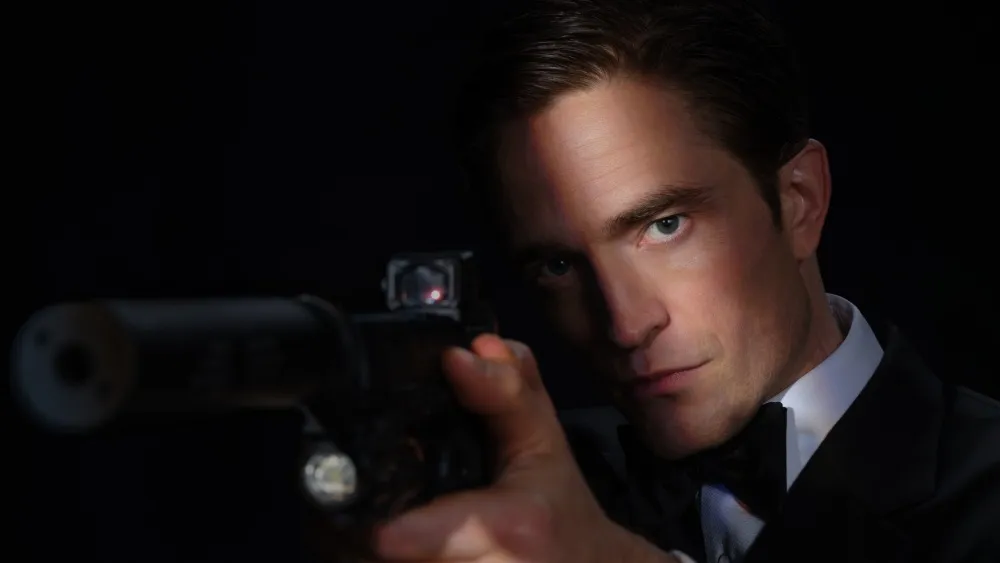

Last week, Robert Pattinson was announced as the next incumbent of the James Bond franchise. As the film industry’s equivalent of a conclave comes to an end, and the white smoke clears, it is worth examining what makes Bond such an enduring and unique brand.
When Ian Fleming first wrote Casino Royale, the concept of Bond having an invisible car or dealing with a biological nanotech weapon would have been outlandish. However, his central character, as Annie Jennings stated in 2006, “is timeless because the essence of James Bond is timeless”. Bond is, as Fleming wanted, “anonymous”, a character that can theoretically be anyone, go anywhere and do anything. Bond’s timeless appeal therefore is baked into the core concept of the character. He can endure.
The anonymous nature of the character means that new cultural or political ideas can be transposed onto it. Brosnan’s 1997 film Tomorrow Never Dies deals with the threat of the rising power of a media empire, a more relevant political take than the by then collapsed Soviet Union. Culturally, Craig’s era represents a reactive shift towards humanisation and interconnected narratives. The basic character is still James Bond, but the context freshens it up for a new audience.
In this way, LEGO offers a useful comparison. John Allert, speaking on our podcast Business Brew, commented on how each generation gets a different interpretation of LEGO – Star Wars, Indiana Jones, Bionicles – while the essential appeal remains the same. Both Bond and Lego show that enduring brands understand what to preserve and what to reinvent.
Equally Bond’s success isn’t just rooted in its anonymity but also its subject matter. As Adam Morgan, founder of brand consultancy eatbigfish says “a successful brand deals in really potent currencies: sex, money, power and death. That’s what Bond is all about”. Bond is synonymous with excitement. And also, like any great brand, with a trademark style. The brand’s identity, its aesthetic, is instantly recognisable. The stylised 007 logo shaped like a gun, the black and white colour palette – a perfect background for an anonymous core brand on which to have fresh colour and imagery projected in each new era. The clothing, the sets, the tone of voice and of course the music. Bond soundtracks, especially the iconic songs and the signature theme composed by Monty Norman are as much part of the experience as the onscreen action. Bond used ‘sonic’ branding long before the term was invented.
At Caffeine we talk about the importance of brand promise. Barbara Broccoli in a 2024 interview said, “It’s all about pleasing the audience, making sure that people get their bang for their buck.” Bond is, in this way, reflective of any global brand. A famous name creates high expectations. The experience has to live up to them, goodwill only goes some way, and each new Bond film must earn the audience’s loyalty again. You have to acknowledge what your audience expects from you, any reputation cultivated needs to be remembered.
So when there was mixed reaction to 2002’s Die Another Day, Broccoli and co. reset the franchise, realising that it had lost its way and become too fantastical; “it just didn’t seem right in a world of danger and high stakes” Barabara Broccoli would later reflect. When people care so much about a brand, they will let you know when you have not lived up to those high expectations.
The Bond film rights may be owned by the US based Danjaq (owned in turn by MGM Amazon) but the literary rights remain with the Ian Fleming estate and for the world Bond remains the ultimate British brand. It is rooted in heritage but constantly evolving with the times and appealing globally. There is a reason that Pattinson’s announcement dominated the front page of BBC News, a good brand has a good story and Bond has several.
If your brand needs a clearer strategy for growth, get in touch with Caffeine.