
BUSINESS BOOKS
FutureShift - How business and brands prepare for what comes next
No one can accurately predict the future. But we can all prepare for it. What lies ahead will be fast-moving, uncertain and filled with challenges – but also rich with opportunity for those bold enough to adapt and evolve. FutureShift is not a book of predictions. It’s a book about preparation, perspective, and purposeful action – for those determined to build the future, not simply react to it.
Inside FutureShift
30 Business leaders interviewed
CEOs, founders, academics and innovators share their perspective on the future of business.
9 Future shifts explored
From AI and leadership to customer experience, talent and purpose.
20+ Industries represented
Perspectives from retail, financial services, technology, manufacturing, healthcare, sport, media and more.
Decades of leadership experience
Practical insights from leaders helping organisations navigate change.

“If you don’t plan for the future you want, you get the one that shows up.”
Rita Clifton, Deputy Chair, The John Lewis Partnership
Why FutureShift
At The Caffeine Partnership, we’ve spent years helping organisations prepare for what’s next. We could have written this book based on our own experience, but we wanted to go further.
So we spoke to 30 business leaders from more than 20 industries, including automotive, healthcare, technology, retail, energy, education, finance, sport and fashion.
We asked them what they believe will shape the future of business—and what leaders need to do today to prepare for tomorrow.
Together, they explore questions such as:
- How will their industry change over the next decade?
- What will customers expect in the future?
- How will sustainability influence business success?
- How will success itself be measured?
- What role will brands, purpose, trust and transparency play in an age of AI and misinformation?
- And what is their one biggest hope—and one biggest fear—for the future?
Learn more from the leaders helping shape the future of business
Click any profile to read their interview and discover their biggest hope and biggest fear for the future.
John Allert
- CEO Ineos Grenadiers
John Allert is the CEO of Ineos Grenadiers, a UCI World Tour Pro Cycling Team. The team has included British legends Chris Froome, Geraint Thomas and Bradley Wiggins and won seven of the eight editions of the Tour de France between 2012 and 2019. John’s long career includes being the Global Chief Marketing Officer for McLaren Group.
John, what are the challenges facing businesses and sport in the future?
I think that sport now is in many ways indistinguishable from business. I’m not sure that consumers know clearly what they want, other than that they want more of everything. They want to be able to curate content to be particular to their moods, desires, lifestyles, available time, and budgets. They want customization and “behind the scenes” access to a greater degree than ever before. They are no longer comfortable with brands, sports teams, or athletes having a wall of privacy or distance behind which we operate. This also plays into their increasing desire for transparency in areas such as sustainability, fair trading, and environmental responsibility. Consumers are going to be more demanding and more discerning than ever.
What do you think society might expect or demand from businesses?
We are at a peculiar crossroads currently – it would seem we are experiencing a revolution in terms of authoritarian or autocratic governance in sport, as in business and politics. In Western markets, we have become accustomed to levels of accountability from authority, whether that be a media outlet, government, sports team, or business. That level of accountability and transparency is now being turned on its head. Society will possibly tolerate this shift for only so long. History shows us that everything is a reaction to what preceded it. If this new style of autocracy is too extreme, society will seek to change it again. These things are cyclical. Society is deserving (and demanding) of accountability and responsibility from the entities it looks up to or serves, and I hope will continue to challenge those entities and individuals looking to subvert this.
What do you see as the long-term impact of technology in the future?
Rapidly evolving technologies like AI will have both positive and detrimental impacts on the world. I suspect technology will improve areas such as healthcare and medical diagnoses, enabling earlier treatments and interventions, which will inevitably lead to a spike in the world’s population. We will therefore potentially add the issue of over-population to our climate challenge, and the way we utilize resources for the production of energy, food, and consumer products will become critical. We’re likely to struggle to find a balance between the upsides of what technology enables and the downsides of its impact. Navigating that dichotomy will be a huge challenge across the next 20 years.
What skill sets, attitudes, and mindsets will people need in future?
Traditional roles and even entire vocations will be impacted by technology and AI. It’s already happening and it concerns me that we’re blindly heading towards such a potentially existential threat. Initially I wonder if we might evolve to a less traditionally hierarchical and more hourglass-shaped workforce. At the top, people working in high-tech enabled roles. At the other end, more human pursuits like craftsmanship and the arts, things that AI and other technologies are not going to be able to impact in the way human beings can. I expect the workforce will consolidate and shrink to some extent. This will impact our consumerist society because wealth will shift to those who can monetize the skills seen as most valuable in this ‘new’ world. There will likely be a increasing gulf between the “haves” and “have-nots” based on these skill sets.
There could well be a significantly larger group of people in Western markets who have significant amounts of time on their hands. Either due to redundancy in required skills or a reduction in the time people are required to work. In that environment, there could be a heightened need for community and spiritualism, where people have pursuits that are not as material as the ones we accept as common today. Technology consolidating vocations could quite literally reshape society. Whilst such impacts feel more likely to be negative than positive, people have extraordinary resilience and an ability to come together in unexpected ways under pressure.
Will technology replace talent?
I’d suggest talent will be defined in different ways. There will always be human talent that technology cannot overtake, such as the ability to think laterally, collaborate, and innovate. Technology will be an enabler, but I don’t think it will drive those things in the way human beings do. There will be an unprecedented demand for people with technological capabilities to squeeze efficiency and/or value from traditional processes and practices
Will technology transform participation as well as consumption of sport?
Sport is traditionally a live activity that people attend or view in real-time. In sport we have maintained relevance by being both unpredictable and entertaining. Technology is increasingly going to challenge the live nature of sport. We have seen the evolution of esports and the success of interactive games like FIFA. I don’t know if all sport in the future will need to involve real human beings; it could be a composite of live and imagined competitions and leagues. For example, I have recently seen avatars used in tennis broadcasts to drive engagement. These developments turn traditional norms on their heads and are challenging to navigate.
Cycling is famous for ‘marginal gains’ – how important will those be?
Marginal gains are critical for being competitive – in any sport. Our team is famous for applying marginal gains to professional sport, but those gains will be more broadly defined in the future. We are looking for tiny increments of improvement across everything we do, including our processes, how we finance the team, and how we operate. Marginal gains is a philosophy of continuous, aggregated improvement, and technology is a brilliant enabler for that.
How will the business model for sports develop?
The business model for professional sports teams is currently clear: revenue comes from broadcasting, licensing and merchandising, prize money or sponsorship. That model will continue, though the nature of those elements will evolve. The challenge for sports teams will be meeting the voracious fan appetite for content, data, insights, and “behind the scenes” access. Serving those personalized data products takes huge investment. Sports teams operating on the margins will be greatly challenged to keep pace with these increasing consumer demands.
In 2025, the INEOS cycling team had 30 athletes and 100 staff. That was not hugely different from 10 years ago, but the roles of those staff members will be significantly different in another 10 years. We use data and insight to better our sporting performance. In the future, our staff will be increasingly engaged in keeping pace with the demands of fans and sponsors, making sure we are packaging what we do in sport in the most relevant and engaging way possible.
Do you think businesses will have different measures of success in the future?
Businesses and sports franchises are commercial enterprises that must be financially viable to exist. That fundamental fact will not change. Softer measures of success, like access to talent or reputational leadership, may become equally important, but I struggle to see them overtaking the importance of financial viability. In a crowded marketplace, we will likely see a reduction in the number of successful businesses or a shorter business life cycle. Darwinian theory applies to brands and businesses just as much as it does in nature: it’s survival of the fittest.
How important will a brand’s “purpose” be?
I believe purpose has become a slightly over-intellectualised and over-hyped tool. Purpose is simply a business or sports franchise having a reason for existing. I don’t see many businesses that have endured across generations if they haven’t had a very singular, simple purpose from which their brand was built. Enduring success requires the application of that purpose to the products. Kodak is a celebrated case of an incredible brand that had a purpose but failed to apply it in a way that allowed them to endure.
How will sports brands reach new audiences?
Increasing scarcity of time and fragmented attention spans mean consumers now “snack” on content. Technology enables fans to snack on sports they have no geographic proximity to and traditionally had no interest in. This has exploded the traditional competitive set for most sports, including cycling. We now see sports fans in Australia, for example, following ice hockey in North America without ever seeing a live match. The globalisation of sport facilitated by technology means our market is much larger, but the competition for that market is also exponentially larger than ever before.
What is your biggest hope and fear for the future?
My fear is that technology means we will have a more crowded planet with more extreme challenges. My most optimistic hope is for a world with an achievable level of peace and greater levels of tolerance in which my children can raise their own children and shape the world better than we have done over the last 100 years.

Ivor Banim
- Senior Corporate / M&A Partner and Head London Office, William Fry
Ivor Banim is a senior Corporate / M&A Partner and Head of the London Office at leading Irish corporate law firm, William Fry (www.williamfry.com). He has more than 25 years of experience in Irish and international Corporate and M&A and private equity transactions. William Fry has offices in Dublin and Cork in Ireland and in London, New York and San Francisco. It has over 350 legal and tax professionals and a workforce of over 500. William Fry is a full-service firm providing commercially focused Irish legal and tax advice to major domestic and international businesses and international law firms and intermediaries and their clients undertaking business in and toward Ireland.
What do you think are going to be the biggest challenges facing companies in the future, specifically for your sector?
Barring global division and unrest, I do not have too many fears for the future. Business and law operate in cycles and have always adapted. A material challenge (positive or negative) for the legal sector will be how it adapts to AI and technology. It is estimated that over 40% of current legal tasks could become automated. The true challenge is navigating associated pitfalls with these developments: dealing with accuracy and bias, protecting client confidentiality, and ensuring accountability is maintained as we come to rely on these new tools. The prevalence of AI will put a greater emphasis on quality of advice, especially on complex matters where experience and expertise will be very much to the fore.
What do you think clients are going to expect from William Fry in the future?
Clients will expect us to harness new technology to provide a better and more client-centred experience. Fundamentally, they will still expect what they always have – certainty. As a law firm, we facilitate transactions to take place properly, with accountability and in our clients’ interests. That will never change.
What do you think society is going to expect or demand from business?
Society will expect business to uphold and advance the rule of law. Without it, society ceases to function – and where it is strong, economies grow, investment occurs, and people live with more security. In this digital age, society will also demand that we have the foresight and discipline to manage the risks of emerging technologies responsibly, ensuring they are used for growth and problem-solving rather than leading to mistrust. You could say that is work lawyers are made for – bringing accountability and certainty to what is new.
As a leader, where are you focusing in order to succeed?
I focus on our people. Large and complex transactions succeed on coordination – keeping people aligned, engaged and performing at the level required to deliver for clients. I also focus on development of our lawyers, and I believe that is done by example, by staying visible, accessible, and doing the work alongside them. A big aspect of this is operating with humility and empathy. Understanding clients and colleagues – what they need, what pressure they are under – is essential to trust and development.
What kind of people will you need in the future?
We need people who want to work hard and develop. As part of this, we want them to build strong relationships internally and specifically with clients as that is where work comes from.
What do people want from the future of work?
We are seeing a shift away from monetary reward and status as the sole signs of success, particularly among younger professionals. For them, success combines balance, career progression, a level of autonomy and access to work that will motivate and interest them.
What is your personal wish for the future?
I hope that emerging technologies open up entirely new possibilities, growth and problem-solving, and that we haves the foresight and discipline to manage those developments responsibly.
Mark Bullingham
- CEO English Football Association
Mark Bullingham is CEO of the England FA, English football’s governing body. Founded in 1863, it is the oldest football association in the world and oversees all amateur and professional football in the UK.
Mark, what do you think the biggest challenges facing football, indeed sports, more generally, are in the future, whether that’s on a five or ten-year timeline?
I think you’ve got to group the challenges facing sports into different buckets. The first one is commercial, with huge changes to the media landscape where funding is being challenged by cost-cutting and media fragmentation. The challenge is not that the audience will disappear, but that they will be consuming media in different ways, which is an opportunity for sports to reinvent how they interact with fans and deliver content. People will always want to watch football, so it’s not a question of revenue disappearing, but rather the method of generating it changing. Regarding societal changes, the format of sports is changing; for example, the way 14 million people in England play football will continue to evolve, putting the player at its heart. People want smaller-sided formats, high-energy experiences, and more flexibility in offerings like five-a-side or three-a-side. Adapting to changing lifestyles and habits is critical.
In terms of the professional players, what do you think they’re going to demand or want in the future?
Professional players want a clear pathway through to the professional game and a manageable calendar of games. There is an ongoing challenge with the calendar being too full, and while removing men’s FA Cup replays was a small step, the fundamental challenge is managing workload while playing in the biggest games like the World Cup and European Championships.
Are there other things that you think society is going to more generally want or expect from football in terms of its governance and what it represents?
From a societal point of view, there is an expectation that football must continue to evolve its governance, particularly as it has become a large global business. This is most obvious in the awarding of international tournaments. It is about making sure there is a robust, transparent governance process with full accountability, especially when tournaments are awarded to single bidders.
Thinking about sponsors and investors, what do you think they are going to want from football and sports more generally?
Sponsors’ commercial objectives—like awareness, brand opinion, or direct sales—won’t change, but the delivery methods will. Technology provides opportunities to integrate content directly into fan consciousness and social media streams. As sports become more sophisticated with their databases and ability to reach fans, more opportunities open up for sponsors. Consumers are becoming savvier about data; they are generally more comfortable with sports organisations holding their data than commercial ones, provided the organisation adds value and provides access to the team.
Fundamentally, investors will always want a return. They have entered the sport because they see there’s still growth there. They obviously have a fixed timescale for achieving their return. There is a huge amount of private equity money seeking to engage broader audiences, reach new markets, and drive commercial growth through technology and social media. We see a huge number of international investors, particularly in the Premier League, who have different priorities than traditional local business leaders. This presents a different dynamic but also opportunities for growth, such as international tours which feed into commercial globalisation.
From the FA’s point of view, what do you think success will be defined as in the future?
The end goals remain the same: winning major tournaments, growing participation, and increasing the number of participants which includes players, referees and volunteers. However, the ways of getting there are very different; we can now engage players and coaches directly with data and gamification to help them improve. This fundamentally different relationship provides more opportunity to achieve our goals.
What about the women’s game?
The women’s game has been a key priority for five years, and while there is great pride in its growth, there is still much to do. We aim for the same number of women and girls playing as men and boys. Commercially, it is still a fraction of the men’s game, so we must grow those prospects and support structures underneath the elite level.
What will you be focusing on in order to succeed?
My philosophy is that a leader’s job is to help those around them succeed by working together on a vision and empowering them. I see the position of the leader as a servant leader. Authenticity is critical, as is building a collaborative team and culture, which is even more important in a post-pandemic world where people work remotely. We felt during the pandemic that we couldn’t over-communicate. I now provide weekly updates and hold regular Q&As and informal communication programmes. People expect access and authenticity, especially within flat organisational models.
What sort of people, in terms of the skill sets and mindsets, do you think you’ll need to succeed?
A growth mindset is critical in a rapidly changing world, as is the ability to collaborate and help grow a culture. We need flexible, low-ego, collaborative people who are prepared to build culture and adapt to changing technology. That means constantly challenging how we do things to see if technology or trends allow for better ways to achieve our goals, such as providing the type of football people want to play. Flexibility is key. That goes for leaders too. It’ll be critical for leaders to have a growth mindset and a flexible approach
What do you think those people will want from the future of work?
Self-fulfilment is critical; people want to believe in the purpose of their business, which for us is to maximise our impact through football. Younger generations specifically want flexibility, empowerment, and to believe in the outcomes they are driving. They want to be challenged and feel they are constantly developing within a business that has a strong purpose.
Technology provides greater opportunities for the sport, but are there any risks or concerns you have about it?
When you’ve got a business where so much of the revenue is driven by effectively selling your IP and your live games, clearly any threat to that is huge. A significant amount of the Premier League’s work is based on anti-piracy efforts. But that whole challenge changes constantly because of technological changes. That’s a big threat to sports revenue because if people don’t have to pay for content, revenue streams dry up.
Security and cyber attacks are increasing risks with financial implications, alongside privacy risks. There is also a risk of people becoming less active as more of their lives are run online, which we must monitor for the future.
But technology can really transform things for the good. In grassroots football, for example, technology can make the game easier to run by automating administration and scheduling. Data and gamification can encourage people to play more, while VR and AR can enhance how fans consume content, making them feel like they are at Wembley or interacting directly with superstars.
So AI represents a phenomenal opportunity, but it will also come with challenges regarding disruption.
What do you see the FA’s actual purpose to be?
Our purpose is inspiring positive change through football. I think football brings the country together in a way very few other things can. But we also see the impact we make on getting the country active and the huge impact we have on the health of the nation. I think there’s also the mental health impact as well. It’s proven that people playing sport can have really positive impacts on their mental health. So the broader impact we have on society is huge. We collectively view purpose as being the fundamental driver for motivation in our organisation. And if you speak to people who work here, we have a lot of people that could earn a lot more money elsewhere, but they come and work for us because they see the impact that we’re having on society and they’re proud of it
What do you think the role of brand would be in the future?
Brand becomes even more important in a media-fragmented world as your identity and promise to fans. I hope all our brands will be viewed positively and that our positive impact on the country will be recognised.
Do you have any personal wish or wishes for the future?
Obviously, I would love to win a World Cup with either the men’s or women’s team to unite the country and inspire a new generation of kids to be active. I also wish to balance the use of technology with keeping people active and maintaining communication skills. One of my biggest fears is that people, particularly children, become less active and lose communication skills due to lives increasingly run online. Sport provides critical life skills and communication that will be even more important in an AI-driven world.
Finally, there is still work to do in the EDI space, including gender equality and diversifying leadership across boardrooms in all sports. Sport needs to ensure it is going after diverse pipelines of talent rather than relying on closed recruitment networks. I think it’s absolutely critical for businesses as well to drive cognitive diversity. That’s how you’re more creative. There are so many studies out there that prove that more diverse businesses perform better.
Jen Cassidy
- CEO, Bristan Group
Jen Cassidy is CEO of Bristan Group, a leading UK-based manufacturer of taps, showers and bathroom accessories. It is the largest supplier in the UK with an estimated one in five households having a Bristan product.
What do you think are going to be the biggest challenges facing companies in the future, specifically for your sector?
In the construction industry, the single biggest challenge is a labour shortage, and I see no overarching plan to do anything about it. While there are many associations championing recruitment, D&I, and sustainability, they often stay in their own lanes due to differing agendas and priorities. I would love a single campaign for the issues that matter to this industry.
The changing expectations of the younger generation coming through who may not be well-equipped for work is an additional challenge. Because they spend so much time behind screens, they sometimes do not know how to build relationships.
AI is clearly going to change the world, and when used well, it is incredibly powerful. However, if you do not have critical thinking skills and just accept what AI is telling you, that is a scary place to be. So I worry about critical thinking skills.
What do you think customers are going to expect from Bristan in the future?
Personalization is key; customers want products and services tailored to them. They want to be able to contact us when it suits them, not just when it suits us, though maintaining 24-hour service levels is a huge challenge. I also think they want us to solve their problems, including ones they don’t yet know they have such as water scarcity. The UK will be in a water deficit by 2030, which is a “now” problem affecting housing developments and business licenses today. We have a role to play in educating people on practical steps, like what a 50-litre household looks like. Customers want to be understood, heard, and helped.
What do you think society is going to expect or demand from business?
It’s increasingly important for an organisation to have a purpose and intention to do the right thing by the world. I believe it should be about authenticity, social responsibility, and continuous improvement. However, I worry that community spirit is disappearing and people are becoming more individualistic. Being a purpose-led organisation provides a competitive advantage because the best people want to work for companies that help them contribute to a community. I come to work because of our positive customer reviews; it is a surprise to people when a company clearly cares, and I will never take that for granted.
As a leader, where are you focusing in order to succeed?
My focus is on people. My role is to facilitate decision-making while inspiring and motivating others. I spend time walking around the building to say thank you to the team, which helps create a sense of belonging and inclusion.
What kind of people will you need in the future?
We need people with the right attitude and values, like accountability and empowerment. We also need people who can network and use internal and external connections to find better solutions. I am concerned that remote work makes it harder for people to learn by being surrounded by others and building those incidental relationships. We ask for three days a week in the office to maintain that energy.
What do people want from the future of work?
More flexibility and variety. To retain people, you must give them opportunities for growth and to try different things within the organisation. I am a fan of development models that take people out of their comfort zones. Even if people move on, I support them; many eventually come back or become partners. Behaviour matters, and I want to recruit people who take personal responsibility and initiative.
What is your personal wish for the future?
I would love to see a world where nobody has to be labeled. While I am proud to be Bristan’s first female CEO, I want to be remembered as their best CEO. It would be amazing if gender, ethnicity, and sexuality were just not a thing.
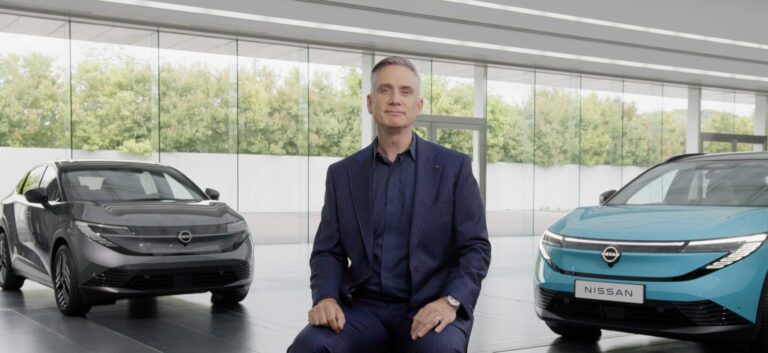
Richard Candler
- Global Head of Product Strategy at Nissan Motor Corporation
Richard, the first question is a big general one: what do you think the challenges for the future of the automotive sector will be?
Well, the first challenge is that it is no longer really about automotive; it is more about mobility these days. We have moved from an automobile industry which produced motor cars in factories and sent them to dealer networks, to one which is about mobility and a number of different routes to the consumer. The power of autonomy—cars being able to drive themselves—is going to open very different mobility options. One of the big challenges with that, is technology and integrating that level of technology into what has been a broadly mechanical product. There is a big employee piece in terms of how we build the skills to take on this new world. Software is a major part; every industry is basically a software industry, and we are being heavily driven by software development.
Another challenge is new entrants. I’m seeing a very rapid emergence of breakthrough companies and ideas probably sited around two main sources. One’s in China who are very aggressive in terms of speed and innovation and that to be honest is making many companies rethink how they bring products to market. The other one’s California, where similar levels of innovation through companies like Tesla are bringing a very new approach to the landscape. So the speed of adaptation required to respond to this over the next decade is probably the biggest challenge for big companies who have had a way of working for 80 or 90 years.
What do you think customers are going to be expecting or demanding for mobility?
I see the move away from product to experience in all walks of life. I’m now talking to consumers who were born with and have grown up with smartphones, for example, they have grown up with the internet in their hands and had access to endless amounts of information. The pure product, the mechanical aspect of mobility is going to give way to a much broader service offer. Meaningful technology that really is going to enhance people’s lives and contribute to society. It will allow people to go faster, to access mobility more cheaply, to achieve what they want to do in a more easy way. We’re going to see big breakthroughs in that overall service experience and the infrastructure that comes with it. The big revolution will be the ecosystem approach.
What might that ecosystem look like?
If I own a Nissan and then I rent a Nissan on holiday, it should know it’s me. I should be able to bring my whole experience with me as part of the brand experience. Maybe the car brings across my music, my destinations, my calendar, what I want to be doing, my payment, it’s more a mobility service, and it can bring the whole experience with me. Think of it like the ecosystem of many of our electronics products. This broader ecosystem of mobility applies whether I am the driver or the passenger and will include public transportation like trains and planes. It involves the whole experience: charging, maintenance, and servicing. There is an opportunity to integrate mobility with the home, such as organizing lighting or heating to be ready for an efficient return.
What about ownership?
The days of people buying a car with cash are almost over. We’re likely to see in future a subscription lease type model with a majority of sales in most markets including the bundling of services. I am not a true believer that everybody is going to just share their car or ride-hail for practical reasons. Time is important; people want instant mobility. Anything where you have to wait for a car is going to be replaced by something where you can just drive away. For some living in cities without parking, sharing may be appropriate, but it is not optimum for families with luggage and pushchairs. Flexibility of mobility is going to be key, providing the right product and service for the right time and person.
Current ride-hailing services require drivers, who are a limited commodity. In an aging society like Japan, taxi drivers in the countryside are not being replaced as younger people move to cities. This is where autonomy and telemetry will come in. Autonomy offers new options, and telemetry could allow for tasks like stocking shelves or driving taxis to be done remotely by people in other locations. There will be a significant portion of society living in the countryside that will still need support and mobility.
What do you think society will be demanding from mobility organizations?
There is now a foundation where people expect a company to be responsible and make the right choices for the planet. While investors still prioritize profit, companies that prioritize people and the planet can be more profitable. Patagonia is a good example of delivering both an ethical and profitable solution.
Can you expand on what skill sets and mindsets will be needed in the future?
I have a strong belief that every company is a software company. But the reality is that most companies don’t have a high degree of software skill. That doesn’t just mean just writing code and programming. Software literacy across the employee population is a really important skill. It will be vital if companies are to succeed.
I am excited about generative AI, which will be as impactful as Google. We are moving from creation to curation. Humans have spent careers creating content like analysis and presentations, but generative AI will drive much of that creation process. The job then becomes curation: deciding which is the best direction to go. We need to retrain for different skill sets, balancing creative and logical skills. These tools are supportive; we will work hand-in-hand with them to create better solutions.
The first barrier to change is the people. Curation requires the ability to make good decisions and understand real customer insight. I think there’s a big part in empathy and understanding and forecasting how expectations might change and evolve. How to make a good decision and then tell the story that sells it. It’s amazing how these skills are going to bring out both creative and logical skills. I think they’re going to be the killer skillsets of the future. The education system needs serious adaptation; it is ridiculous to tell kids they cannot use generative AI in school when they will be using it in their future jobs. Generative AI is the best teacher you will ever have because it is infinitely capable and constantly improving.
What do you use these tools for?
Image generation for inspiration and summarizing enormously complex pieces of text. I use it for mundane tasks like writing meeting minutes or summarizing recorded discussions. I use it to learn things like data science and coding. We can build tools that analyse sentiment on the internet in seconds, a task that would normally take a team a month of research. Designers can use it for brainstorming and generating hundreds of concept variants. We can even create specialized GPTs that personify a customer persona or represent years of experience in a key role to help newcomers. Many things we do today are going to become irrelevant very quickly.
Do you worry about issues around truth, transparency, and trust?
There is bias in AI, which reflects the biases that exist in society and customer research. Transparency of the models is complex, but I view AI as a correlation tool that finds links between hundreds of different dimensions. It helps us understand the parameters within a system, like pricing. My goal is to build tools that give teams an understanding of these parameters so they can make better decisions as curators.
How important will brand and purpose be in the future?
I think that the soul of an organization is really depicted by the brand. I think the last 10 years have taught us that brand is the most critical element to generating value. If I look at the most valuable companies today, they have a very clear value proposition. A clarity about what they do. When we think about leadership, when we think about teams, this clarity is one of the most important aspects. People just want to know what is their role within that structure. The companies that are able to have that clarity of direction are the ones that are going to deliver enormous customer value, business value and stakeholder value.
What is your personal hope or wish for the future?
I have wanted to design cars since I was six years old, despite being told by career guidance to think of something more realistic. I strongly believe in societal transformation through electrification. Quiet cities and clean air are the two things that really inspire me towards electrification. Something that will have a much bigger impact than anyone realises. On a personal level, I want to build cars that really shape society, the kind that future generations will look back on in museums. Finally, I believe personal mobility drives social mobility. It provides access to food, education, and work, especially in rural areas. My fear is that we take mobility for granted in the modern world; social mobility, the ability for people to do better for themselves, is driven by their access to physical mobility. I want my kids to live in a society where they have good access to social and economic mobility, and clean air.

Rita Clifton CBE
- Deputy Chair, The John Lewis Partnership
Rita Clifton CBE is a portfolio chair and non-executive director, including the Deputy Chair role at the John Lewis Partnership. John Lewis Partnership oversees some of the UK’s most popular and prestigious brands, such as Waitrose and Peter Jones. It has a revenue of over £12.426 billion annually. Rita’s extensive career and experience has seen her dubbed ‘the doyenne of branding’ by Campaign magazine and a ‘guru’ by the Financial Times.
Rita, what do you think the role of business in society will look like in the future?
I think we are wrestling with what we value in society. We are going through a reset in the UK and all over the world with the changing of political guard from left to right and back again, often in more extremes. Resolving what it is we value as societies will be one of the really big questions for both business and brands because the future is not written. Despite the unstable socio-political backdrop, we can all make a big difference in our own lives, and I think that sense of agency for people in business, who feel life is worth living and the planet is worth saving for our grandchildren, is vital. If we don’t save the planet, the planet won’t save us. The truth is there is no business on a dead planet, and there is no good business on a socially unjust one.
What role do you think business can have in planning/shaping the future?
If you don’t plan for the future you want, you get the one that shows up. Business and brand owners have an extraordinary role to play in creating the kind of society and planet we eventually decide we want because governments mainly influence people within borders, whereas business at its best can transcend boundaries in a way that governments never can. That is a huge opportunity.
And what are the challenges for the future?
We are seeing planetary-wide challenges about keeping the systems going that enable the human race to survive. Even if the human race survives, certain parts of the world will become uninhabitable, which will cause enormous social upheaval unrest because environmental refugees will upset the socioeconomic stability of nations. Geopolitical challenges like unstable regimes, autocracy, and populism involve “punch-ups” over borders for resources and power. All the darker side of human nature is there. Put together climate change, geopolitical unrest, social fragmentation, and resource and supply chain limitations, and it’s difficult to think of bigger challenges.
So you think it’s important for businesses to be more responsible than ever?
Alongside the socio-political stuff, we have waves of anti-capitalism or extreme capitalism moving in unexpected ways. This creates enormous uncertainty and anger, together with the challenges of corporations that have a complete lack of self-control operating across borders. This is why the role of responsible business and brands is fundamentally important. We must ensure they succeed more than the businesses that may benefit from instability as part of their business models when they are based on rage and polarisation to attract more clicks. Consumerism can play a part; people can vote these “mega-corps” out if they are not making the world a better place, though these companies can often control the news cycle as well.
What will employees need to succeed?
For employees to succeed, they need resilience, empathy, drive, and purpose. We must be nosy, open-minded, and flexible, with a hunger for learning. Education must teach people to be open to possibilities. People want work that provides safety, stability, and flexibility, while being life-enhancing and enabling relationships.
How will customers experience brands?
Customers experience brands in very different ways than they did 20 or 30 years ago, in part because categories have seeped and blurred into each other. Take retail, anyone can be a retailer, and anyone can be a medium. Retailers can be media, and retail media is a big profit opportunity if you have a great customer base and experience. So retail needs to think beyond the sector and consider how strong a brand it has in the round and its relationship with customers, rather than just being a “retailer” in the traditional sense. Physical outlets are still very helpful as your flagship, sensory experience and beacon; they are gateways into the real, living and breathing world. Retail can also be a brilliant sector for getting into communities and helping to solve issues of social cohesion.
What do you think the future of the workplace looks like?
We know that human relationships enhance happiness more than anything else so we must make sure we are building that in our workplaces. Mutual, respectful relationships where everyone is valued are essential. I tend to dislike divisive political terms like “working people,” as if managers and leaders aren’t working. I am also a big believer in employee ownership because it aims for a fairer society.
What do you see as the role for brands?
Brands make life clearer and easier. Human beings will still need editing and trust, and both play into the power of brands. When brands like Nokia disappeared, it wasn’t the brand that was the problem; it was that people didn’t use the brand properly as an organizing idea. Tactical tech brands go up and down like fireworks, whereas properly sustainable, long-term consumer relationship-based brands last. Brands will live as long as you have permission from consumers and balance efficiency, quality, distinctiveness, and safety. Brands are curators and editors that allow us to outsource aggravating time spent on endless choice. We need innovation from great brands to solve practical problems like energy, food, and climate change.
How do you think AI will change transparency and trust?
I think we need a trusted AI brand. Trusted for the truth. I remember working with Reuters in the past and Reuters was often the objective factual news organisation because it was bringing the most objective truth one could generate to people. The future requires some form of equivalent of Reuters or BBC. At the moment we don’t have that.
What is your biggest hope and biggest fear for the future?
My biggest fear is that we cannot mitigate the harm we have done to the world and can’t create something better for the next generation My biggest hope is that we build a world in which planet and people thrive, where we can all lead and have a good life and live cooperatively with each other.
Luke Dashper
- Founder and the Creative Director of global fashion brands, POETRY and Wrap London
Luke Dashper is the founder and Creative Director of global fashion brands, POETRY and Wrap London. Based in London, he leads an ethically driven company committed to beautiful designs and responsible production, with every collection made from 99% natural fabrics.
What do you think the biggest challenges will be for your sector in the future?
Right now we’re battling with many short-term issues, such as geopolitical concerns, a breakdown in globalization, and the advent of technology and its impact on life in general. For a fashion business, the key to successful long-term survival is maintaining the relevance of your product offering. It is as simple as that. Not many brands are successful at doing that from one generation to the next. Typically, a UK fashion business is built up, sold, the founder leaves, the accountants move in, and then the brand dies. Try to think of UK fashion brands that have sustained beyond one generation; there aren’t many. Having a brand that is appealing to existing customers while also appealing to new ones is the challenge.
As long as you are producing things people want to buy, you will find a way of making the economic model work. Fundamentally, the biggest challenge is maintaining relevance because fashion changes all the time.
What do you think customers are going to want from your business in the future? Both your brands are set up on ethical principles – treating suppliers and people right, using natural fibres, and choosing quality over quantity. Do you think those will be even more appealing in the future?
One of our advantages is that we are run with a long-term focus. We have values we adhere to and we don’t chase growth at all costs, whereas many businesses have shareholders demanding short-term delivery of sales and profit. If you are tasked to deliver short-term returns, you end up turning to discounts and promotions, which we don’t do. Discounting destroys long-term brand value. In fashion, you need to have a point of difference and a point of view. Our point of difference is our belief in natural fibres making better clothes. Clothes made from natural fibres are more pleasant to own and wear. They look better and get better over time, in stark contrast to synthetic fibres which, without exception, only get worse.
Our philosophy is simple: if we create products that are genuinely beautiful and of exceptional quality, we’ll build lasting relationships with customers. They’ll appreciate the designs, enjoy wearing them, keep coming back, and become loyal advocates.
While many brands are tempted to cut costs by blending premium fibres like linen with cheaper alternatives such as viscose, we’ve chosen a different path. Rather than compromising quality, we’re absorbing rising material costs and doubling down on our commitment to natural fibres.
At the same time, we’re investing in designing our own exclusive fabrics. That means our products stand out not only because of the garment design, but because the fabric itself is unique – creating a level of originality that competitors can’t easily replicate.
Success is often measured in shareholder value. How might success be defined in the future that would be different from now? Are there other measures?
My aim is not to sell the business but to enjoy what I do until I no longer want to. If my sons are interested, I would like to hand it over to them. My objective is to build a business where stability and security are the priority. Over the long term, stability and the bottom line are the same thing. Measures of success for me are the stability of the business, the number of customers, the amount of cash in the bank, and a lack of debt.
One challenge is how you connect with new customers. Our model of mailing a brochure works well. Other businesses that ditched brochures for digital have burnt through cash and are now coming back to them. Digital marketplaces are dominated by monopolies like Google and Meta, and the costs they charge make them very challenging to leverage profitably. The advent of AI is going to disrupt that.
What will you as a leader need to focus on to succeed?
The key is maintaining the relevance of the brand, which I do through a team. It is incumbent on me to make sure I’ve got the right people and that we are working together. Our process is a genuine collaboration between a small team, including designers and buyers. Retaining those people is vital because they learn what the customer wants. Customers tell us what they want through what they buy, and interpreting that feedback is about balancing human intuition with knowledge. You can’t be formulaic about it; it is an informed creative process.
What sort of people do you need to succeed in terms of skills and mindsets?
Experience in other companies is not so valuable to me because people come with baggage and every fashion business is different. I look for people with an open mind who view our business as a unique situation. They need a talent for colour, style, and design.
What do you think these people will want from the future of work?
A particular challenge is that we are located (in West London) where the cost of living is high. It is important that we are in the office because the work is a collaboration, but it is difficult for people to afford to live within a commutable distance. Financial viability is top of mind for my employees. The transport infrastructure is also a challenge. Once they get to work, it’s a nice environment, but getting there can be difficult.
The work we do is very physical – touching fabrics and seeing them on models – which cannot be done remotely. That is part of the joy of creating, but the challenge is that there’s a cost to the employee in terms of travel, to actually come in and do that.
How do you see the role of AI within the context of truth, trust, and transparency?
For us, AI is not a threat but a tool to potentially do things cheaper or better. We are experimenting with building a digital avatar of our fit model to shorten the sampling process and make it more efficient. The same technology is being used for editing marketing imagery. Other brands will start using AI-created avatars that aren’t real models, but for our proposition, we may emphasise the human aspect of our offering instead. We have a real person write copy for our website and brochures instead of using Chat GPT. We use human models and photographers to create our campaign imagery. Emphasising human imperfections rather than a super-perfect AI universe is a choice. Technology doesn’t always make things cheaper; digital photography just meant we created thousands more pictures, which hasn’t saved money at all.
What do you see as the role of purpose and brand in the future?
If you get the brand right, the rest follows relatively easily. My working time is focused on creating a brand people want to engage with. In the absence of a motivating brand, the rest is a waste of time. The brand continues to be the most important thing.
Alan Gilpin
- Chief Executive Officer, World Rugby
Alan Gilpin is the CEO of World Rugby, the international governing body and federation for rugby union which oversees over 134 national unions. He has been instrumental in growing the sport and particularly the women’s game which has experienced a period of “super growth” in the past decade.
What do you think are the biggest challenges and opportunities facing sports and, especially, rugby in the future?
Sport is now competing with every other form of entertainment for people’s time and money, making it difficult to stay relevant to the next generation of fans. We can no longer assume fandom is inherited; just because a parent supports a team doesn’t mean their children will do the same. To succeed, we must ensure rugby is accessible and relevant by meeting audiences where they already consume content, such as reaching young women in India through their preferred digital platforms. We are approaching this through two lenses: promoting the sport as a means to teach life skills and physical activity; and promoting it as a commercial entertainment product. While football remains the only truly global sport, other “challenger” sports must be smarter about how they compete for attention in a fast-shifting consumer environment.
Regarding participation, how do you see the way people play rugby changing?
The traditional Commonwealth club structure is expensive and cannot be easily replicated in markets like China or Saudi Arabia. We must work within the education system to get rugby onto school curriculums, focusing on motor skills and exposing young people to the sport early. Society is moving toward “time-shifting” their exercise, which means participating when it fits their lives rather than adhering to rigid club schedules. This requires developing more accessible formats, such as touch or tag rugby and non-contact, smaller-sided games. Additionally, we must address safety perceptions regarding head impacts, as these concerns can lead individuals and parents to decide against playing the game.
What are the expectations of stakeholders like clubs, players, and investors?
Clubs and players will want what other professional sports will want: more money coming into the game to sustain and grow professional careers. That’s why we need to ensure the game remains and grows in popularity by focusing both on participation and consumption. One area everyone is excited about is the women’s game. We must be thoughtful about the pace of investment in the professional women’s game to ensure the talent base is strong enough to support the product. In terms of investment, we have to always reflect on what are best ways forward. The US model is interesting, for example, because it focuses on building enterprise value rather than annual profitability. But that might not be the right way forward for us because we have to balance many stakeholder interests. Third-party capital can make the sport more efficient as long as there is a mature debate about aligned interests. And then there are our sponsors and brands; they will increasingly hold us to account on social impact, sustainability, and inclusivity as those are issues that are important to the fans they want to reach.
And what about the expectation of fans?
I think what’s true of all of our fans is that they are going to hold us to account differently going forward than they have in the past. So if Rugby wants to talk about environmental sustainability or diversity and inclusivity, they’re going to expect the right type of action. We can’t just be talking about those things; we are going to be held to account as to how we deliver against clear objectives.
How will success be defined, and what skills and mindsets do you need inside the organisation?
All sports measure success by spectators, audiences, financial return, etc. In our position overseeing the sport of rugby globally, we definitely believe that what sport does through physical activity and teamwork is important and therefore participation is an important success measure for us. But we also believe that growing audiences, having more people consume the sport, enjoy it, advocate for it is also a success measure. So we want both participation and consumption to grow, and if both are growing, then our commercial success will develop, and we can invest more in both.
Success is a dual measure of thriving grassroots participation and growing global audiences that advocate for the sport. We need a workforce that is more diverse and inclusive in terms of gender, background, and thought to respond to the requirements of our fans. We also require talent with a digital and social-first mindset capable of creating content for fans who may only consume small parts of our sport through various platforms.
You say that you have a clear goal and purpose, but this requires different approaches in different markets. What do you mean by that?
Growing the sport globally, means we have to manage expectations differently in established and emerging markets. There’s one set of challenges in established markets. There’s another set of challenges in emerging markets. So it doesn’t necessarily have to grow the same way everywhere. In some parts of the world, rugby might be more consumed and less played. In other parts of the world, it might be more played and less consumed.
What role does technology, specifically AI and e-gaming, play in the future of sport?
AI has a huge role in player safety, such as using anonymised data from smart mouthguards to find trends that inform medical decision-making. It also allows us to meet fan expectations by automating match highlights much faster than a human editor could. We are embracing e-gaming to help younger generations understand and demystify the complexities of rugby, similar to how the Madden game helped people understand the NFL. We also recognise that responsible betting is an opportunity to engage audiences, particularly in markets like North America where it is being legalised quickly.
What will people want from the future of work in the sports sector?
The workforce now expects an enriching, empowering environment that responds to societal and consumer shifts. While passion for the sport is a great motivator, we must provide guardrails to ensure employees can disconnect and maintain a balance outside of work.
What is your personal hope and fear for the future?
My fear is that sport could become less relevant in a fast-moving world or that one or two dominant sports will push out all others in the attention economy. My hope is that sport continues to be a powerful unifier that brings people together and drives positive societal change. I believe sport can play a role in fractured communities by giving people something better to do than engage in conflict.
Will Good
- CEO of Prominate
Will Good is the CEO of Prominate Group, providing creative, sustainable and technology-driven branded merchandise and marketing solutions at scale for leading brands worldwide.
What do you think are going to be the biggest challenges facing companies in the future, specifically for your sector? I think one of the biggest challenges for is balancing scale and niche – volume with great work. Operating as a mono-branded company is difficult because clients like to put companies into specific buckets, which limits our ability to be seen for multiple things. On top of that, trends move so incredibly quickly that things can go from niche to mass market almost instantly. Because of this, the average lifespan of brand has plummeted. Finally, there is the existential threat of AI; if I don’t drive future-back transformation now, eventually a bot can come along and potentially replace some of the services we provide.
What do you think customers are going to expect from Prominate Group in the future? Asking what customers want is a dangerous question because I honestly don’t think people always know what they want. Speaking personally, I just want to be looked after and I want reliable products that I can inherently trust. In the marketing services world, my clients present a real paradox: they want us to be a trusted partner, but they also want a transformative agenda, and balancing those two is very difficult. I also deeply worry that as AI agents increasingly make purchasing and cultural choices for consumers based on algorithms, organic discovery will be lost. For example, I like punk rock, hip hop, English choral music, and Russian folk songs. Now, I’m sorry, but from experience I know algorithm can’t work it out – nor do I want it to.
What do you think society is going to expect or demand from business? Society is going to demand genuine accountability. Up until very recently, sustainability and social impact were largely voluntary, allowing companies to mark their own homework. But now, legislation is coming in to punish bad practices, meaning many companies that previously acted as flag-bearers for good might actually get caught out. Society will expect businesses to have sustainability fundamentally baked into their existence – rather than just relying on marketing slight of hand. I’m also really concerned about the rise of disruptive digital companies that are funded to make a s*** ton of money without playing the corporate responsibility game, and the negative societal impact on the good people who get left behind or put on the dole because of them.
As a leader, where are you focusing in order to succeed? I am very keen on driving as much future-back transformation as I possibly can to ensure we stays ahead. To do this, I’m focusing on investing in people and teaching them how to execute this transformation, rather than just building apps to tell them what to do. I’m also actively looking for ways to embrace collaboration, systems, multi-branding and partnerships.
What kind of people will you need in the future? The people I need will really depend on the specific goal, because the skills you require for scale are not the skills you require for niche work. To achieve scale with global clients, I need people who can glue the world together and makes the client’s job easier with minimal fuss. For our niche-r offerings, I need specialists who perform very specific needs and are granted more latitude. Ultimately, I think everyone needs people who are capable of leading transformation, rather than those who rely on being told – technology or not.
What do people want from the future of work? I worry deeply about the people who get left behind by “disruption” and cost cutting. I don’t want to see a future where businesses generate enormous amounts of money for a very small amount of people, eroding net brand value while just putting a load of good people on the dole.
What is your personal wish for the future? My biggest hope is to see a renaissance of the demand for real things that do real s*** for real people across both the commercial and creative worlds. I want a future driven by reason, imagination, and empathy. My biggest fear is a world organised in a way where decision-making is sidelined by algorithms and AI, and human imagination just ends up in a pickle jar.
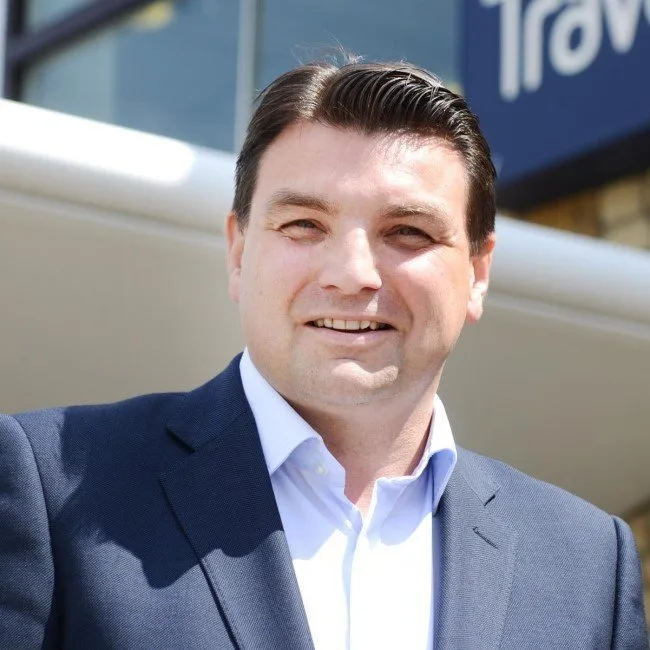
Peter Gowers
- CEO of Busy Bees Global
Peter, what do you think some of the biggest challenges business will face in the future?
The main challenge for business is an increasingly diverse group of stakeholders who have widely differing and often competing needs. The world is getting more complicated, and people expect answers quickly, but what they want often conflicts head-on.
Specifically, I see intergenerational differences within countries; depending on age and life stage, people think very differently. Cultural differences are also widening because, for the first time in my working life, more economic growth is coming from China, India, Indonesia, Brazil, and Nigeria than from traditional American and European markets. You have to understand how products need to be customised for these different countries and cultures.
Furthermore, people now have a level of access to companies and a speed of communication that didn’t exist before. They can use social media to mobilise many people behind things they do or do not like about your company very quickly.
Finally, the relentless pace of change in technology means businesses often have to confront how they manage tech before the public has a settled view or the government knows how to regulate it. The issue for leaders is not just what you can or want to do, but how you reconcile different people who want very different things at once.
What implications does that have for business leaders?
We need people who understand others and their differences – what they value, what engages and motivates them, and how to get the best out of them. It’s not enough to be clever. We must understand people because our customers are more diverse, our colleagues are more diverse, and our relationships are more important. If you don’t understand people, you can’t get the best out of any of this. That means recognising how we are different in some ways and similar in others and being genuinely interested in that. I’ve spent much of my career trying to understand the psychology of customers in different parts of the world and different teams, making plenty of mistakes along the way. But I believe curiosity about why people do things – or don’t – is essential. A diplomat friend of mine says the myth is that people everywhere are the same, they’re not. They want very different things. Understanding that is crucial. And as technology automates more logic-driven processes, the real skill will be understanding people and inspiring them to act because businesses are collective enterprises. People who don’t understand people will really struggle, even in technology-led businesses.
What will customers want in future?
Customers will still want products that meet their needs at a price they can afford, but they increasingly want companies that share their values. They want companies that have a commitment to their customers and are responsible to the communities and environments they impact. Arising generations are more concerned about the company itself and its impact than people were in previous generations.
What about societal expectations?
Society wants businesses to deliver valued products, but they also want them to develop employees to ensure social mobility and to pay them fairly. There is a rising demand for companies to pay their fair share of taxes and to be net producers of resources rather than consumers. However, society still expects businesses to generate an economic value uplift bigger than their cost of capital, because if they don’t, they go bust. Success is now measured not only by the economic value you create, but by the degree to which you improve the lives of customers, colleagues, and the wider community.
What do businesses need to succeed in this environment?
I believe we need three attributes. First, business is a team game so, as I said earlier, we need people who understand people. As technology automates logic-driven processes, the “clever bit” will be understanding human motivations and aligning resources accordingly. Second, we need leaders who think holistically. In the industrial society, we have been trained to see the world as a machine with discrete processes, which can lead us to lose sight of the whole picture and the knock-on consequences of our decisions. Third, we need managers with the discipline to focus on what matters most for their specific organisation rather than just following the zeitgeist.
What do people want from the future of work?
Of course, we all want our pay and benefits to reflect the value we bring. But more and more, people want to feel that what they do actually matters – that it’s worthwhile in the eyes of the world, or at least to the people they care about. We all want to be proud of what we do. My father’s generation took pride in the name on the building and the quality of what they made, and that was enough. Today’s generation wants something deeper – a sense of purpose and self-actualisation. They want interesting work, autonomy, and ways of working that fit the lives they lead. The challenge for leaders is that what people want isn’t static; it shifts with life stages and circumstances. Managing that mix takes real attention and skill. Somewhere along the way, companies stopped treating employees as part of a relationship and started treating them as assets. And when that happened, employees began treating companies the same way – as something to consume, to move on from when the deal no longer works. The next generation sees that clearly. They’re saying: if you give me purpose, fairness and trust, I’ll give you my best. But if you don’t, I’ll go find it somewhere else.
How do truth, trust, and transparency fit into this, especially with AI?
Truth, trust, and transparency are fundamental, but businesses that lack them sometimes win in the short term, placing pressure on others. Therefore, companies must have a “true north” regarding their values, and shareholders must be prepared to back those values even when there is an economic consequence. Some people say that principles are not worth anything unless there’s some sacrifice involved in having them. If you are operating in a country where not participating in a culture of commissions or bribes causes you to lose, well that’s the right thing to do for well-run and responsible businesses, but it means we may lose to companies that will do that. And we need to be honest about the fact that that’s what will happen. Having higher standards of working practises in a country. will have a cost. But we need to be human. We need to be grown up about it and say that those things cost something else.
In technology, we need much more disclosure. I want to know what data you gather, the rules of your algorithms, and whether I am talking to a real person or a bot.
We have spent 30 years ensuring trust in financial reporting; we now need the same level of transparency and audited processes around technology, sustainability, and fairness. This is a profound change for leaders who have come up through functional silos, like marketing or finance, because they are now expected to sign off on the whole picture of the company’s impact.
What is the future role of brand and purpose?
Purpose remains an essential way for a company to define how it engages with a complicated world. It helps shape decisions made far away from the leadership. In the future, purpose must be embedded in critical financial processes like tax strategy and capital allocation, not just HR or marketing. Brands will continue to be a shorthand for attributes, but those values must now encompass ethics, environmental sustainability, and honesty. Consumers will increasingly use their consumption as a statement of how they want to live.
What is your biggest hope and fear for the future?
My hope is that as a society, we start to be more honest with ourselves. Big change is complicated and involves uncomfortable trade-offs, like spending more on energy to invest in a better grid or consuming differently to lower our impact on the planet. My fear is that we keep looking for simple answers, individual “superheroes” to save us or someone to blame when things go wrong. We should focus on systemic improvements and understand that progress is often two steps forward and one step back. I hope for more grown-up conversations about the outcomes we want and what we all might need to change.
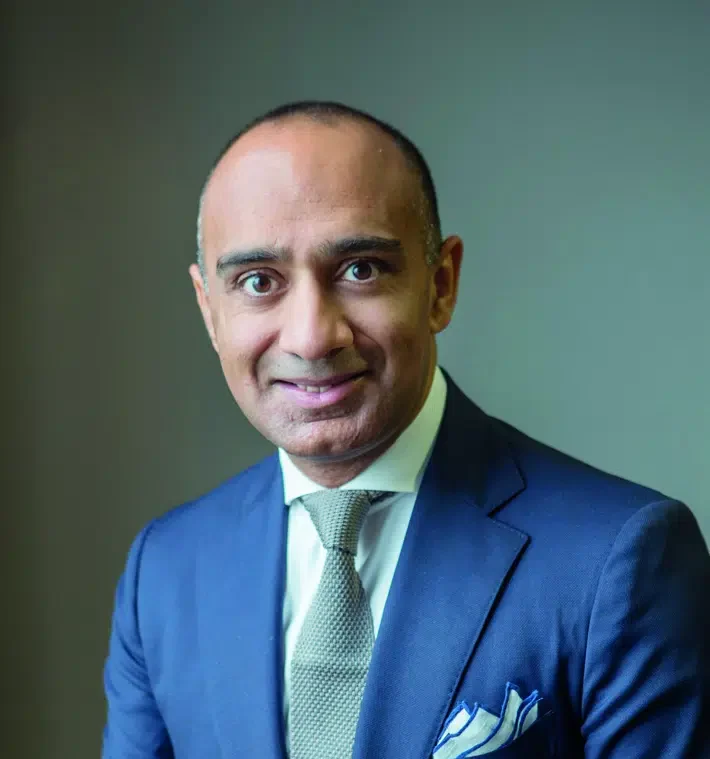
Aatif Hassan
- Founder & CEO, Dukes Education
Aatif Hassan is the founder of Dukes Education, one of the most inspiring and fast growing providers of education for children of all ages. Their institutions include Cardiff Sixth Form College which is unmatched in the world for A-level results and Hampstead Fine Arts College is widely considered as London’s leading Art school.
Aatif, the first question is what do you think is going to be important for education in the future?
I think we are at an exciting and somewhat daunting period of human evolution. The last we saw like this was probably in the late nineties with the emergence of the Internet. We saw at that moment how life in terms of efficiency, prosperity, careers and even valuations of organisations changed. I think in the late nineties you were valued by the number of clicks you had, rather than any form of financial metric.
I think we are at a similar phase today. And there is a great opportunity for us in education. As horrific as the pandemic was, it gave us huge learnings for human evolution. From that, we learned that schooling is not just about education. The value of human contact, socialisation, the need to communicate the need to be belong, is really important. And the rise of AI is making that need even more important.
Are there specific challenges for children in the future?
A big challenge is the emergence of an incredible rise in anxiety, mental health problems and genuinely, there are social, behavioural and now medical issues as a result of these things. That manifests itself in rising cases of special needs, nutritional challenges, and sleep deprivation. Children today, by a number of factors, are facing a much more complex environment than when we were just kicking around a ball in the playground a few decades ago. So we’re really having to think very hard in this fast paced, high performance world, about how we actually provide that stillness for young people to really connect with something which is a core inside themselves.
Will there still be a place for human skills in the age of A.I.?
The paradox is almost amazing. The emergence of artificial intelligence, and the evolution of robotics has meant that ironically, as we move to increase digitization, efficiency and ease in the world, we become more in need of humans. The need for human connection, the need for the world of creativity, the ability to do things that robots may not be able to do is going to become increasingly important. We really need to become more human.
Are there subjects, owing to this, that you think will increase in value?
Subjects which weren’t as valued previously, such as the arts, drama – skills which ordinarily we didn’t leave school thinking were important – will become highly valuable. The ability to speak well, the ability to listen well, the ability to empathise, are all going to become really important.
And there’s still an importance of learning in later life?
We now know that you’re probably not going to have one career leaving school. You’re probably going to have at least three, which means at two more points in life and potentially more you’re going to have to find a route back into learning. So what we’re instilling in young people is that propensity to learn. As part of that learning journey, we have to have that ability to challenge, be analytical, and critique. In a world where accessibility of information could be from artificial intelligence or from less desirable sources on the Internet, you’re going to have to learn to be professionally sceptical. But above all, people who love learning, they’re curious, they’re creative, and are full of character to know the difference between right and wrong, they will succeed.
Do you think purpose will continue to be important for organisations in the future?
The very simple answer unequivocally is ‘yes’. The single biggest driver of success will be our ability to navigate growth whilst maintaining our culture. And the best way to do that is to hold on as tightly as possible to our founding purpose. Revisit that. Test it. But hold it as our driving north star.
What do you see as the value of purpose to your employees?
We know that the young people who are coming into employment now value purpose, a company’s ethics, sustainability, the transparency in which the organisation is run, the trust between leadership and the change makers on the ground. That’s valued much more than when we were children.
And what about the role of brand?
I am a big believer in the importance of brand. Brand is what people say about you when you’re not in the room. From the outset, when we founded in 2015, we were never Duke Schools. We were Dukes Education. We always felt that we were about something bigger than just schooling. From our first launch event, we set about to create a brand. And to create a brand, it’s got to stand for something. It’s really got to stand for values in the organisation. Values have to be totally mirrored and led by example in the board, in the senior leaders, and the middle leaders have to follow that and the team on the ground who are doing the work the change makers need to be aligned in that. And only then will the consumer, in our case the children and the parents follow that brand.
What do you think will be the measures of success that educational organisations will be aspiring to in future?
One measure for me that is most important is what I call LQ – the Longevity Quotient. Rather than look at an organisation’s profits or a PE ratio or share price, we want to look at our long term impact. Instilling a lifelong love of learning. We always remember a great teacher. 20 years on you’ll remember a great lesson that changed you. That’s what we have got to keep our eye on. The LQ. And the best way to do that is to really listen to Children. Parents are demanding for sure, but I think the most demanding people are actually the children themselves. We have a sustainability policy. We have someone who leads our sustainability initiative, but I can tell you it’s being driven by the children themselves.
What is your biggest hope and fear for the future?
My biggest fear is that the world becomes even more divided. We learn from history, most of the wars have been created by divisions be they in religion or in territory.
My biggest hope is that Dukes can be an inspirational influence on the young people we are privileged to look after. And that the world becomes more harmonised; so much prosperity and happiness could be driven by that.
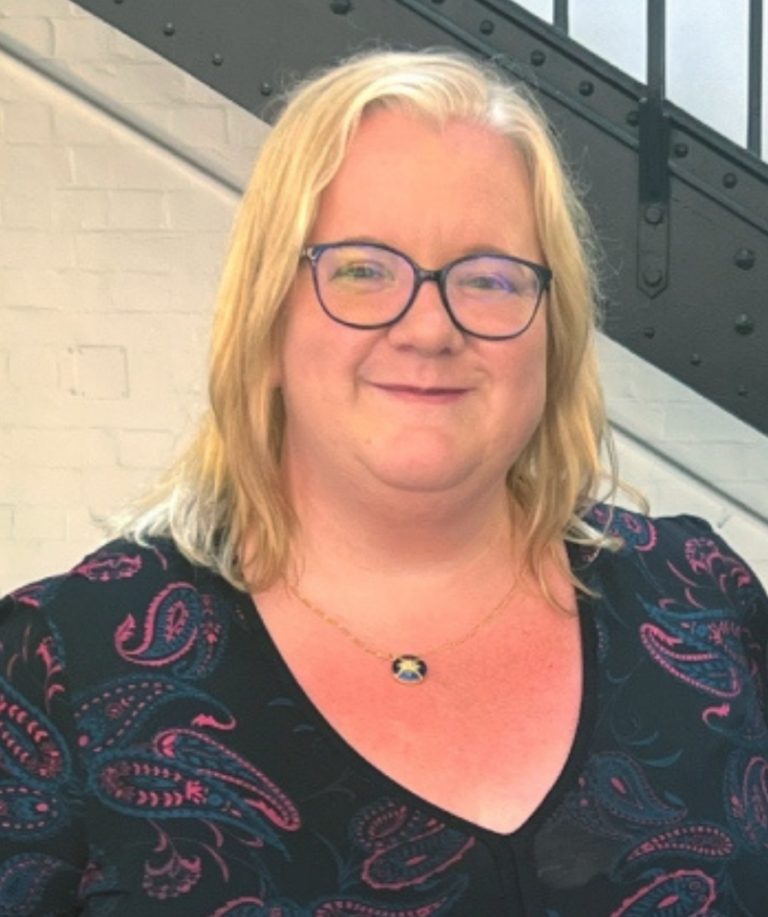
Lorna Hughes
- Managing Partner, VCCP Roar
Lorna Hughes is a Managing Partner of global PR and communications agency VCCP Roar, which brings together deep sector expertise, creativity and content production to help consumer, tech and financial services brands earn attention and drive impact.
What do you think are the biggest challenges facing companies in the future?
The biggest challenge is that we simply do not know what the challenges will be. We are dealing with the impact of things totally out of our control, and since 2020, leadership has become about reacting constantly to external factors. You can no longer be insular and assume that if you just get the business right internally, success will follow. We are heavily impacted by government decisions, such as the budget and new regulations in the tech and service industries, as well as a global economy that is not bouncing back quickly. Business leaders now have to adapt and try new things constantly because external factors are so hard to predict.
Tell me about the generational shift you are seeing with people entering the workforce.
There is a huge shift with Gen Z, much of which is due to the lockdown in 2020. Many were in their formative working or education years during that time and managed people through Zoom rather than in person. While they talk a lot about empathy and authentic leadership, they can actually be one of the least empathetic generations because they didn’t have to see the immediate social impact of their style or opinions on others. We see contradictions where they expect the business to provide mandatory mental health days, yet they get angry with their own juniors for being off sick. However, they are also very ambitious and have a better understanding of work-life balance than previous generations; they aren’t willing to work 13-hour days for very little return, which is healthy.
What kind of people do you need in the business now, given this environment?
We need that ambition, but we also need resilience and adaptability. In an agency, teams change frequently due to the economy or people moving on, so staff must be able to handle that cycle. We also look for people who can learn empathy – people who can take a pause, and not respond to an email in the heat of the moment. Trust is also a major issue; there is often a lack of trust between leaders and their teams, especially regarding working from home. I find that the longer people stay in a business, the more mutual trust is built as they see the company go through ups and downs.
How do you instill that trust and a sense of togetherness?
We focus on cultural initiatives. Interestingly, it is often the small perks that build the most trust and engagement. For example, we have a “Jolly Trolley” on Thursdays with drinks and snacks, and our pulse surveys consistently show that people value that more than long-term benefits like external mentoring or expensive gifts. We have had to accept that the workforce is more transient now, with many people planning to stay only two or three years before traveling or doing something else.
What do your clients and customers want from your agency in the future?
They want us to prove our value constantly. It is no longer standard practice to have a supplier for 30 years without question; procurement departments now pour over every line and often ask for 15% to 20% off the budget while expecting the same results. We have to invest in tools and AI to measure the impact of our work, especially in PR, where it has historically been hard to prove how a five-year reputation programme leads to a direct sale. Clients need us to be alert and often act as an extra pair of hands because their own internal teams have been downsized.
Has the relationship with clients shifted from being an “order taker” to something else?
Definitely. Clients are overtly asking for a “sparring partner.” They are under so much pressure that they can become insular, and they need an agency that has the backbone to stand its ground and offer external thinking. I’ve had clients choose us specifically because they felt we would argue with them. Being a trusted advisor is a skill we have to teach our junior leaders; they need to learn how to advise strongly and negotiate rather than just being “too nice.”
How do you help your people develop that confidence?
It comes down to leadership trusting people to either thrive or fail. I tell my juniors that I trust them to go for it, and if they fail, I will be there to pick up the pieces. Giving someone the lead on a client or letting them into a room with a CEO to see that they can add value is the best way to build that professional confidence.
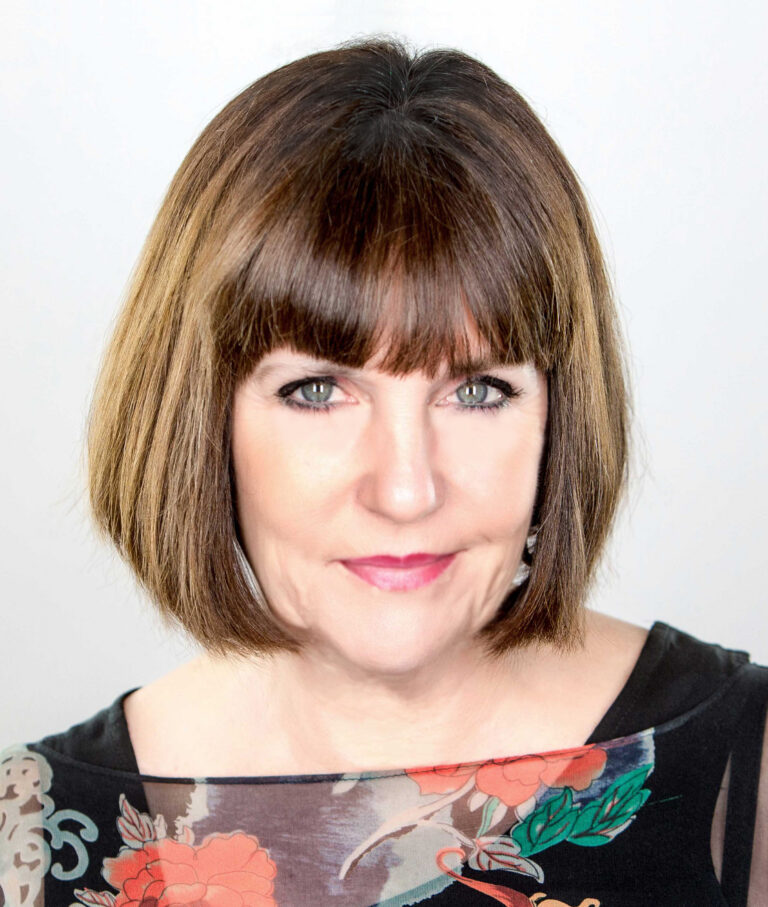
Wenda Millard
- Chair of Sinecure, Inc.
Wenda Harris Millard is Chairman of Sinecure, Inc., a next-generation talent advisory firm redefining how companies discover and hire talent. It integrates executive search, sourcing-as-a-service, fractional hiring and SaaS tools, servicing all levels of the talent community. In April 2022, Millard was inducted into the American Advertising Federation’s Advertising Hall of Fame and was presented with the David Bell Award for Industry Service
What are the biggest challenges facing companies over the next five to ten years?
Talent management – specifically hiring, developing, and retaining people with the right skills – is a primary challenge. We also have to figure out how to adapt to the impact of AI, learning how to harness its power for good while mitigating its negative aspects. In industries like media, marketing, and entertainment, navigating intellectual property rights will also be an ongoing hurdle. Additionally, companies face a major challenge in balancing skill sets; the intense focus on hard skills, especially in tech, has often come at the expense of soft skills, which creates real issues in managing teams effectively.
Is the pace of change important for businesses now?
Yes, because the world has become incredibly complex, consumers and business customers are desperately seeking simplification in their lives. There is a prevailing belief that technology can do everything, but we have to ask ourselves: do we want ‘everything’? For instance, if you go into a supermarket and see eight different choices of Triscuit crackers, it becomes overwhelming. As a business, just because you have the technology or ability to do something doesn’t mean you should.
What kind of people do you need to deliver that?
We need people who possess strong soft skills, empathy, and an understanding of the human side of success. It requires individuals who have a curious mindset and the adaptability to navigate frequent organizational and career transitions. To truly succeed, you need great managers and co-workers who focus on creating environments of success for every single employee. Finally, leaders must be willing to be a student at all times, continually educating themselves on what is happening in the wider world and how it affects the business.
What will those people want from the future of work?
Employees are increasingly seeking meaning, purpose, and alignment with their beliefs in their jobs, moving away from the old mindset of long-term employment purely for a paycheck. They are demanding greater flexibility, a better work-life balance, and are prioritizing experiences over material possessions. We are seeing a phenomenon where people are quick to quit jobs they dislike because they know what they value. To retain these employees, companies will need to offer robust career pathing and ongoing training and development programs.
What is your personal wish for the future?
My personal wish is that the importance of education continues, that society remains informed, and that opportunities for freedom of choice continue to be spread.
Sarah Payling
- Managing Director of Ocean Media
Sarah, what do you think are the biggest challenges facing the housing sector in the future?
We are looking at a horizon defined by the 10-year strategic plan for housing. For the last 12 years, I have written Europe’s largest housing conference program, and every year has started with the fact that we are in a crisis. Our land values and build costs are too high, making homes unaffordable across all tenures, and we simply aren’t building enough of them. While there is an opportunity with a government that prioritises housing and targets 1.5 million new homes, the challenge remains one of quality, healthy homes, and sustainability.
Regarding sustainability, is there a specific challenge for housing?
We have the oldest housing stock in Europe and more detached or semi-detached homes than any other country, which makes retrofitting existing homes to a decent level a huge hurdle. The problem is that net zero often gets confused with building safety or asset management. Additionally, net zero is suffering because our sector is heavily regulated on things like damp and mould, but we are not regulated on net zero. When companies have no money, they purely focus on the bits they’re regulated on, causing sustainability initiatives to fall off their agenda.
What do you think customers and tenants are going to expect or demand in the future?
Whether they are social renters or in the private sector, everyone is looking for a safe, warm, and affordable home. Social renters now have a very effective voice through an active ombudsman and are demanding higher standards. In the private sector, particularly in London, affordability is so critical that even non-housing employers are getting involved in housing policy just to attract talent who can afford to live near their work.
What about the people working inside the housing sector? What will the future employee want from their employers?
It has become a tough place to work. When I joined in 2008, social housing was seen as a beautiful sector with a strong social conscience. You’d leave a well-paid job to go into social housing because it seemed like a really good thing to do.
Now, there is significant reputational risk, and frontline officers often face abuse and antisocial behaviour. Recruitment and retention are constantly in our top five risks because it can be hard to attract people given the negative headlines and pay. We have to work really hard to attract people from different sectors into our sector. Leaders like Greg Reed at Places for People are working hard to support employees, but it’s a thankless profession at the moment.
On the flip side, what will companies expect from their people in terms of skills and mindset?
You still need people who have empathy and genuinely care about the residents. However, we also need a new breed of people who are data and tech-savvy. Our housing management systems are often outdated, and landlords need a better understanding of how to use AI, technology, and GDPR.
What do you see as the role of technology and AI in housing?
There are two massive roles. First is customer engagement, which allows us to reach a broader range of people. Second is stock condition surveys. Currently, many associations replace kitchens or bathrooms on a fixed 10-year cycle regardless of their actual state. We can use monitoring tools to understand what a home actually needs, which saves money and allows for better targeted investment in repairs and maintenance. My fear with AI is the ethics behind it; we deal with vulnerable people, and if technology is used incorrectly in that environment, the repercussions can be huge.
What do you think society at large is going to expect from the housing sector?
Society expects that people who work long hours should be able to afford a decent, healthy home in a safe place near their schools. We have, at the time of this interview, 160,000 children growing up in temporary accommodation, and the eventual cost to the economy of not giving them a stable place to grow and learn will be enormous. We need to radically change how we do things because more of the same won’t fix it.
Finally what is your biggest hope and fear for the future?
My biggest fear is the one I have mentioned: the ethics behind technology, specifically the risk of using it incorrectly with vulnerable people in social housing. My biggest hope lies in the opportunity to work with the government to address our housing needs.
Andy Siegel
- Former Head of Employer Brand, TIAA
Andy Siegel is the former Head of Employer Brand at TIAA, a leading financial services organization providing retirement plans and investment solutions for individuals and institutions in the academic, research, medical, and cultural spheres.
Andy what do you see as the single greatest challenge facing business leaders today, and does this challenge change depending on the size of the organisation?
I think the biggest thing looking forward is differentiation and customisation. I’ve worked for big companies, but my wife and I also own a small local business, and, looking forward, I’m interested in how a trillion-dollar corporation and a local kids cooking studio are very similar in that they both have to focus on differentiation and customization. By that I mean in a sea of sameness how does the organization big or small differentiate itself from its competitors in a world where there is more data available than ever, more information, more comparable tools and more ability to separate one from the other. I think woven into that is how do you find the right thing for the right person? Brand affinity is always important, but at the same time, if the person down the street’s got it at a better price, with better service and exactly what you need, are you going to stick to the brand you are comfortable with or are you going to go for something great that’s customized to you? So for businesses large and small, how you differentiate yourself and make it almost feel customized and personalized for the user, is a huge part of where all industries are going
Beyond personalisation, what are the primary demands and expectations that consumers are bringing to the table now?
They want ease and simplicity more than ever. We live in an incredibly dynamic world, and the expectation is immediate gratification. People want to grab their phone, ask a question, and get the answer instantly. Think about AI and how travel planning has changed—you can go on ChatGPT, enter your travel dates for Paris or London, and have a complete, customized itinerary in 20 seconds. Historically, you’d have to sit down with a travel agent, talk through budgets, and spend six hours before getting any real information.
This level of accessibility shapes how consumers view every organization they interact with. Website user experience (UX) has to be flawless. If a customer cannot find what they need on your website in two clicks, they are going to move on. This challenges organizations to be both quick and highly accurate, which is a difficult balance to strike, especially when correctness cannot be sacrificed for speed.
Society seems to be demanding more from businesses, not just in terms of convenience, but in terms of social responsibility and governance. How do organizations navigate these shifting societal expectations and define their success?
The bar of excellence is continuously being raised because society has infinite access to standard-setting information. However, when we talk about corporate values, there is a massive gap between rhetoric and operational reality. We often see organizations stating they are values-driven when they are not. If a business is truly values-driven, its decisions must be actively guided by those values, rather than just using them as marketing fodder because it sounds good on paper.
This leads directly to how we define and measure success. Profit is a reality of business—it’s like oxygen; it’s necessary for life, but not the purpose of life. Yet, corporations get so married to short-term quarterly metrics and shareholder expectations that they lose their way. We are sometimes afraid to do the right thing because we are so stuck in corporate nonsense.
Many companies say they’re values driven. They’re not. Are they making decisions based on the values or saying they have company values because it sounds good? How do you defend asking people to “lead with the values,” but base performance success exclusively on business results? The “why” behind the metrics needs to matter, too. We are sometimes afraid to do the right thing because we’re so stuck in corporate nonsense.
You mentioned corporate metrics overriding values. How does this tension play out in talent acquisition, recruitment, and building an authentic employer brand?
The employer brand should impact directly how you recruit and retain people. Your goal should always be to tell the right story in the right way to attract and retain the right talent. Too often, HR leaders get hyper-focused on speed-to-hire metrics. If you want to improve your speed-to-hire, it’s very easy: make your recruiters available 24/7, grab the first three resumes that come in, and hire one of them quickly. That will make your metrics look great, but it has absolutely nothing to do with building a strong, sustainable employer brand.
We have to ask: are we measuring against the right things, or are we actually trying to find the right person? When you rush hiring just to preserve headcount or satisfy a metric, you put in place a quick go-to-market action plan to hire a warm body that you hope works out. But don’t your clients and customers deserve better?
Can you imagine getting a customer saying, ‘I had really bad customer service from Bobby.’ And your response being, ‘Sorry, we only had 48 hours to hire someone, so we chose Bobby.
If speed is the wrong metric, how should leaders think about finding and nurturing the ‘right’ people for the future?
We need to look for dynamic ability and a willingness to learn. It’s about hiring people who can pivot as the role pivots, rather than someone who is just a perfect box-checker for a static job description. To use a relationship analogy: when you start dating, you’re looking for someone who is ‘exclusive-worthy,’ ‘fiancé-worthy,’ and eventually ‘wife-worthy.’ You are looking at the long-term potential of growing old together. Yet, in corporate hiring, we often look for a quick hookup. We hire a director based purely on immediate, narrow needs, rather than asking: is this a future senior director or a future vice president? We end up with a series of professional one-night stands and then wonder why our organisational relationships don’t go anywhere.
We also need to recognise that employees want to feel appreciated and wanted. They want to know that what they do matters. It doesn’t always have to be about changing the world or curing hunger—not every company can be Patagonia or Zappos. But micro-wins matter. For instance, in my wife’s cooking studio, we always say we are in the experience business, not the food business. If you can give a kid a great 90-minute birthday party on Saturday, you have done right by them. Fulfilment at work often comes from helping a teammate solve a problem, mentoring a colleague, or making someone’s day slightly better. We need to define success in ways that allow for these human wins.
With the rapid acceleration of AI and digital platforms, how should we handle the growing concerns around trust and truth?
Our fear over technology is actually the healthiest part of it. We are aware of the dangers, the fakes, and the limitations. But because we have this healthy fear, we won’t wake up one day surprised that robots have taken over. The real challenge is raising our children to understand, leverage, and help mature these tools rather than relying on them blindly.
At the end of the day, people are still at the root of everything we do. Humans are fundamentally good, well-intentioned, and want to feel like their day has value. Whether you are an executive or an entry-level analyst, you want to know that the time you spent awake was of value. Technology is just a tool; the human need for purpose and connection is what remains constant.
Finally what is your biggest hope and fear for the future?
My biggest fear is that technology (specifically AI and deep fakes) becomes dangerous and scary, and that we might rely on it singularly rather than understanding it.
My biggest hope to find mental comfort from always making decisions in a way that helps me and my family find whatever comfort we need. My daughters aren’t going to Ivy League schools, but they are good, kind people. I have a happy marriage, a safe, warm home. That mental comfort is incredibly important to me, and my wish is simply to continue having that, because I know not everyone does.
Richard Thompson
- Chair, England and Wales Cricket Board
Richard Thompson is the Chair of the ECB (England and Wales Cricket Board). It oversees all levels of cricket in England and Wales, including the national teams and the Physical Disability, Learning Disability, Visually Impaired, and Deaf teams – described as ‘ From Playground to Test Arena’
Richard, let’s start with a broad view of the future. What are the biggest challenges or opportunities facing cricket and sport more widely over the next five to ten years?
I’m an optimist, so I see more opportunity than challenge. Currently, broadcast television is more reliant on live sport to survive than at any time since the TV was invented. This creates a unique co-dependency where premium sporting products have never been more valuable. However, the challenges involve maintaining those high valuations and navigating the fact that players now have more power than ever. Through social media, players can communicate directly with consumers, and clubs must treat them as true partners. We are also seeing a globalisation of sport, with sovereign wealth funds and private equity viewing sports rights as “triple A” investments, similar to pension funds or prime real estate. The pace of change is so fast that it is hard to look beyond a four or five-year cycle.
How do you see the role of the women’s game developing?
The women’s game has been under-invested in for years, and we are now playing catch-up. In this country, the turning point was the Lionesses winning the Euros, which created a wave of interest that crossed into all women’s sports. Ten years ago, we had no professional female cricketers in this country; this year, we will have 130. Interestingly, while women attend matches, data shows more men watch women’s sport at home. It is becoming a major career path with salaries in women’s professional cricket now ranking as some of he highest for any female team sport in the country.
What will players and fans demand from sport in the future?
Their demands are quite different. Players, particularly in international cricket, will likely want to play less domestic cricket due to the sheer intensity of travel and the physical toll. Fans, on the other hand, want bigger and better experiences. Compared to American franchise sports, we are still sport first and entertainment second. We have to entertain a generation that has grown up with attention deficit issues, providing engagement that goes far beyond just what is happening on the pitch.
What does society expect from a sport like cricket?
As the head of a governing body, you are a custodian, not an owner. Fans, or fanatics, will always have the power to drive an owner out if that owner don’t respect the community. My “North Star” for English cricket is for it to become the most inclusive sport in the country. In a polarised world, cricket has a huge part to play in bringing together fractured and broken societies. Where else will you find white, working-class, English, Bangladeshi, Pakistani, Indian, and Sri Lankan kids all playing cricket united by one common purpose? They love cricket, it breaks through any racial tension and other things where people feel they’re different.
How is the nature of investment and sponsorship changing?
Sport is one of the few places left where you can reach a mass audience that is held captive by their passion. Brands want that authentic relationship. Even traditional venues like Twickenham are giving up naming rights, and while places like Lords remain subtle, you can still count 14 different brands discreetly visible on Centre Court at Wimbledon. For investors, cricket is a huge opportunity because 80% of our revenue currently comes from the national team, meaning there is massive, untapped value in our domestic products. I can see brands getting even closer to sports so their values are even more aligned. If we are saying, for instance, that we want Cricket to be the most inclusive sport, that really impacts everybody in the sport, and every stakeholder should be thinking toward that goal.
How will success be defined in the future?
Success will always be about winning World Cups and the Ashes, but success off the field is equally vital. If cricket becomes the most inclusive sport in the country, that will feel like winning the Ashes to me. We also measure success by grassroots growth; we are currently the only team sport growing in the under-16 category, which is essential for our long-term relevance.
As a leader, where are you focusing your efforts?
I focus on legacy, planting trees to provide shade for another generation. I want to see the seeds we sow now germinate in ten years. For example, I’m working hard to get cricket back into state schools. Since many schools lost their playing fields, we are building “cricket domes” on concrete in big cities like Bradford and Luton. If we can get two million kids through these domes, we can reclaim that space.
What kind of people and skills do you need to succeed?
I look for leaders who value purpose and can identify with our core values of inclusivity and equality. I prefer a culture where people ask for forgiveness rather than permission. We’ve also had to define our brand distinction; while chairman st Surrey we decided the Oval wouldn’t try to be an imitation of Lords. Lords can be the most exclusive venue; the Oval will be the most inclusive – the “People’s Oval.” Technically, we need more data analysts and sports psychologists to find marginal gains. While athletes may have reached their physical peaks, we can still win through mental study and the better interpretation of data.
Do you have concerns about AI and misinformation?
The big tech brands and governments must work together to distinguish fact from fiction. Misleading people is illegal, and we need frameworks to keep it under control. My specific worry is anecdotal, but the idea that generative AI could hack code to allow people to bypass subscription fees for live sport is a dangerous potential crisis.
What will people want from the future of work?
The world is more competitive than it has ever been. While there is a narrative about working less or from home, the reality is that the world’s biggest economies work incredibly hard. To be in sport, you have to be “all in.” If someone else wants it more than you do, they are going to win.
What is your personal wish for the future?
My wish is for a fairer society, a levelled playing field where social mobility provides a genuine meritocracy and opportunity for all.. Success shouldn’t be determined by a postcode lottery. Cricket gave me the network and platform I needed after I left school early, and I want that same opportunity for everyone. I believe in the “alchemy of purpose”. When you do have a purpose, things come to you. You attract other people with a similar vein that also find purpose really important in what they do. If you put purpose at the centre of an organisation, it gives everyone permission to make things happen. My goal is to stay agile and lead the way rather than just managing what we already have.

“FutureShift is a refreshing antidote to the endless stream of business predictions that rarely survive contact with reality. Andy and Louisa have drawn on decades of experience and insights from industry leaders to create a highly readable book about thinking, preparing and acting in uncertain times.
It won't tell you exactly what the future looks like, but it will help you ask better questions, spot emerging opportunities and build a business that's ready for whatever comes next. Thought-provoking, accessible and highly relevant.”
John Murphy, Founder, Interbrand
ABOUT THE AUTHORS
Together, Andy and Louisa have spent decades helping organisations prepare for change. In FutureShift they combine their experience with insights from 30 leaders across more than 20 industries to explore what comes next.
Andy Milligan
Andy Milligan is one of the UK’s leading brand and business growth advisers. For more than three decades, he has helped organisations around the world build stronger brands, create distinctive customer experiences and prepare for the future.
Working with CEOs and senior leadership teams, Andy has advised organisations across industries including automotive, financial services, retail, healthcare, telecommunications, sport and consumer goods. His clients have included McLaren, FIFA, Nissan, Barclays, Unilever, Orange, WWF, Roche, IHG and Sage.
A regular international keynote speaker, Andy has shared his insights at conferences around the world and has appeared across television, radio and the business press, including the BBC, Sky and CNN.
- Trusted adviser to CEOs and senior leadership teams
- International keynote speaker on brands, customer experience and business growth
- Author of seven bestselling business books, including FutureShift, On Purpose, BOLD and Brand It Like Beckham
- Adviser to global organisations including McLaren, FIFA, Barclays, Unilever and Nissan
- Drawing on interviews with 30 business leaders from more than 20 industries, FutureShift explores the trends, opportunities and leadership challenges that will shape the next decade, helping organisations prepare for what’s next.
Louisa Clarke
Louisa Clarke is a brand and customer experience specialist, having spent her career working with leaders to turn bold ambition into practical action. Now at Selective Marketplace – owners of global premium fashion brands POETRY and Wrap London – she shapes how the brands show up across every customer touchpoint. A qualified business coach, her previous books are Networking for Introverts and The Work Smarter Guide to Presenting.
The Conversation Doesn't End Here. Tell Us Your Future Hope & Fear
Every person featured in FutureShift shared one simple but powerful idea: Their biggest hope and their biggest fear for the future. Now we’d like to hear yours.
The future isn’t written by authors alone. It’s shaped by all of us. Share your thoughts and join a growing conversation about the future of business, technology, leadership and society.
The FutureShift Conversation
The Conversation doesn't End Here
Real hopes. Real fears. Real people. From around the world.
Every week we share new voices and ideas.
